

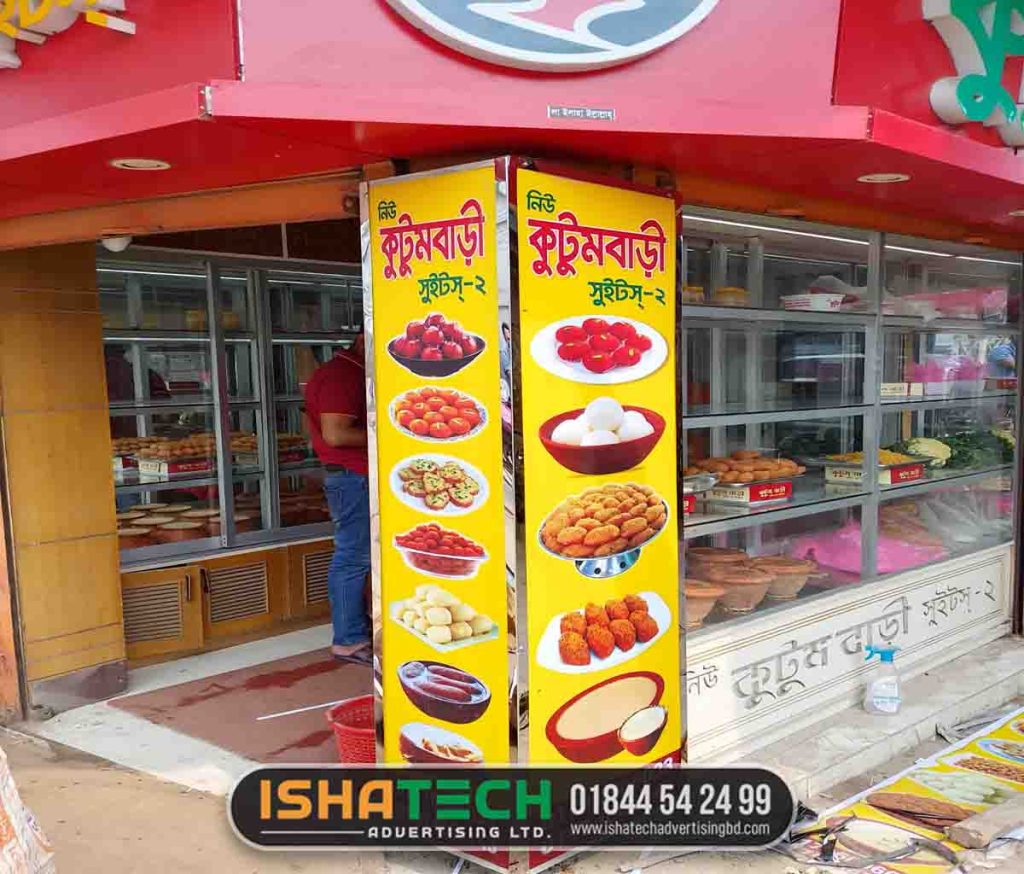

The difference between LED signage and traditional signage is significant in terms of visibility, energy efficiency, durability, and flexibility. Here’s a detailed comparison, especially for businesses in Bangladesh:
Visibility
LED signs: Bright and visible day and night
Traditional signs: Visible mainly in daylight; require external lighting at night
Energy Efficiency
LED signs: Low power consumption, up to 80% energy saving
Traditional signs: Higher energy usage due to neon, fluorescent, or halogen lights
Lifespan
LED signs: 5–10+ years, long-lasting LEDs
Traditional signs: 1–3 years, frequent repainting or tube replacement
Content Flexibility
LED signs: Programmable, display scrolling text, images, videos
Traditional signs: Static content; changing it requires repainting or replacing parts
Maintenance
LED signs: Minimal; occasional cleaning and LED replacement
Traditional signs: Frequent maintenance due to fading paint, weather damage
Design Options
LED signs: 3D letters, acrylic, stainless steel, neon-style, backlit or edge-lit
Traditional signs: Mostly flat boards with paint or vinyl
Cost vs ROI
LED signs: Higher initial cost but better long-term ROI
Traditional signs: Lower upfront cost but frequent replacement and low visibility
Durability
LED signs: Weather-resistant, dustproof, waterproof options
Traditional signs: Susceptible to rain, humidity, and sun damage
Interactivity
LED signs: Can integrate with smart systems, timers, and sensors
Traditional signs: Completely static, no interactivity
Branding Impact
LED signs: More attention-grabbing, enhances brand image
Traditional signs: Limited impact, less noticeable in busy areas

